|
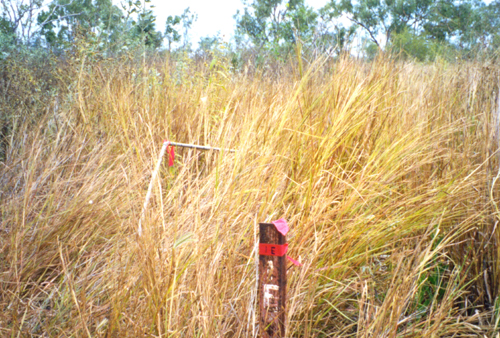
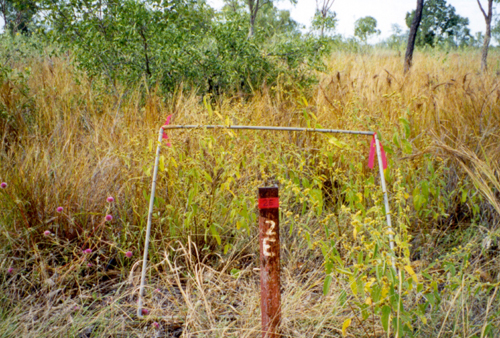
Pasture yield increased rapidly in the first few years following exclosure (Photo 1) and the Poor condition exclosure recovered to equal the Good condition area (Photo 2).
Photo 1. Pasture within the Good Condition exclosure in April 1973 (top) and June 1978 (bottom). Yield had increased over the five years and perennial grasses replaced much of the short-lived limestone grass. Rubberbush had invaded the exclosure by 1978 (see following comments).

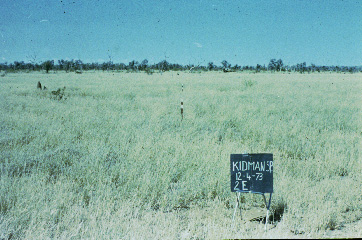
Photo 2. The Poor Condition exclosure in April 1973 (top) and June 1978 (bottom). By the latter date, grasses had reclaimed most of the bare areas and pasture yield equaled that in the Good Condition exclosure (see Photo 1). Rubberbush also invaded this exclosure.
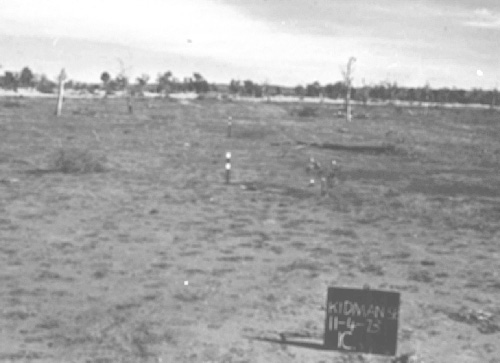

From 1973 to 1978, there was little difference in pasture yield and composition outside exclosures, suggesting a slow recovery on these grazed areas (Photo 3).
Photo 3. Pasture yield remained low from April 1973 (top) to June 1978 (bottom) on grazed areas outside exclosures. Native couch was the dominant species in 1978. Contrast this photo with the preceding 1978 photos (Photos 1 and 2) taken inside the exclosures.


There was little difference in measured yield inside and outside both red soil exclosures in 1989 and this remained the case over the next ten years (Photo 4). Pastures outside the exclosures have improved because of better cattle management as part of Kidman Springs Experiment Station operations and because of control of feral donkeys and horses.
Photo 4. In 1999, pasture yield was similar on grazed (top) and exclosed (bottom) areas. Black speargrass had colonised much of the grazed area producing sharp transitions in yield similar to that visible in the top photo.


Within exclosures, tall perennial tussock grasses such as whitegrass (Sehima nervosa), bluegrass (Dichanthium sericeum) and black speargrass (Heteropogon contortus) have covered areas of bare soil (Photo 5).
Photo 5. Large areas of bare soil occurred in the early years of exclosure (top). Tall perennial grasses covered these same areas 25 years later (bottom).


Wet-season rainfall was well above average in the mid 1970s (Fig. 1) and this no doubt drove the rapid improvement in pastures within exclosures. Rainfall during the 1980s was more variable with some wet-season totals being well below average. Despite this variability, perennial grasses have continued to increase on both exclosed and stocked areas, which are now more lightly grazed. An important feature of northern Australia is that at least some rain falls during each wet season. This feature, coupled with strategic spelling or lighter stocking, should mean that savanna pastures have an enhanced ability to recover from grazing compared with the more arid rangelands.

Numbers can sometimes supplement the story told by pictures. Figure 2 shows how pasture yield has changed in the poor condition exclosure, and on the surrounding grazed area over the last 25 years. The dominant features are:
- Yield rapidly increased in the first few years following exclosure. (It was depressed in 1976 because cattle broke into the exclosure.)
- By 1979, yield within the exclosure greatly exceeded that on the grazed area.
- Since then, yield has increased on the grazed area and is now similar to the destocked area.

|